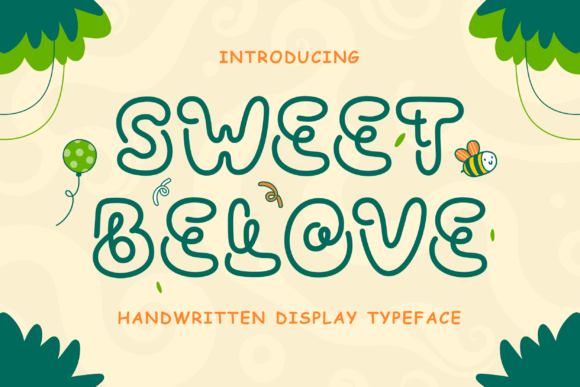
Sweet Belove Font Review
As a small business owner who spends hours crafting custom labels and designing shop listings, I was excited to test out Sweet Belove. This playful handwritten display font has a unique charm that instantly elevates any project. Its rounded bubble strokes and whimsical letterforms feel like they were drawn with a pen and a smile, making it perfect for handmade brands that want to convey warmth and personality.
Sweet Belove for Candle Labels and Packaging Design
When I first tried Sweet Belove on a candle label, I was struck by how effortlessly it brought a sense of fun and approachability to the design. The soft curves and gentle swashes make it ideal for product names, scent descriptions, or even short phrases like “Handmade with Love.” I used it on a batch of soy candles, and the font added just the right amount of character without overwhelming the packaging. It pairs well with minimalist layouts, letting the font stand out while still feeling cohesive.
For packaging design, I found that Sweet Belove works best when used in larger sizes. On smaller tags or product stickers, the details can get lost, especially if the text is too dense. That said, when used for headlines or titles, it adds a touch of elegance that feels authentic and inviting. I also appreciated how it handled different color schemes—whether paired with pastel hues or bold solid colors, it maintained its playful energy.
Sweet Belove for Greeting Cards and Wedding Invitations
I tested Sweet Belove on a set of wedding invitations, and it transformed the entire look. The font’s friendly yet refined style made it perfect for save-the-date cards, ceremony programs, and thank-you notes. Its bubbly letters gave a warm, personal touch that felt more like a handwritten note than a printed card. I paired it with a simple serif font for the body text, which created a balanced contrast that kept the design from feeling too casual.
On greeting cards, Sweet Belove shines as a headline font. Whether it’s for birthdays, anniversaries, or seasonal messages, it brings a sense of joy and celebration. I used it on a series of printable cards, and the font’s readability made it easy to work with in digital templates. For handmade cards, I found that using it in a larger size with some spacing between letters helped maintain clarity, especially when printing on thicker paper.
Sweet Belove for Digital Printables and Wall Art
As someone who creates printable wall art, I was eager to see how Sweet Belove would perform in digital formats. It worked beautifully on a set of farmhouse-style signs and planner pages. The font’s hand-drawn aesthetic gives it a cozy, homey vibe that’s perfect for rustic or vintage-themed designs. I used it for a downloadable wall art template, and the font’s unique letterforms added a custom feel that made the design stand out.
For digital printables, I recommend using Sweet Belove for titles, headings, and decorative elements rather than long blocks of text. Its playful style is best showcased in short phrases or single words, where it can really shine. I also found that pairing it with a clean sans serif font helps balance the design, especially when creating templates for planners or bullet journals.
Sweet Belove for Merchandise and Product Tags
I tested Sweet Belove on a few tote bags and mugs, and it looked fantastic. The font’s rounded strokes and soft edges give it a friendly, approachable look that works well for boutique-style merchandise. On a custom tote bag, I used it for a tagline like “Bloom Where You’re Planted,” and it added a subtle yet stylish touch. It also worked well on product tags, where it helped reinforce the handmade feel of the items.
When using Sweet Belove for merchandise, it’s important to consider the size and placement. On small tags or product labels, the font can become too intricate, so I suggest keeping the text brief and using a slightly larger size. For cut-through materials like vinyl or heat transfer, I found that the font holds up well, but I recommend testing it on a sample before mass production.